Every year, hundreds of thousands of people travel to Turkey for dental treatment. Some return with life-changing results. Others return with deeply unsatisfactory outcomes. When asked whether it is safe to have dental implants in Turkey, the most accurate answer is: it depends entirely on where you go.
That is not an evasion. It is the most useful thing anyone can tell you, because the gap between a well-run clinic in Antalya and an operation that cuts corners is enormous. Understanding that gap is what this guide is about.
Before evaluating whether Turkey is a safe destination, it is worth understanding what safety means in the context of dental implants.
Implant failure -where the implant does not fuse properly with the bone, or where infection develops around it- is rarely random. It is almost always traceable to one of a handful of causes: poor surgical technique, contaminated equipment, inadequate pre-treatment planning, or the use of low-grade implant components.
A safe implant procedure requires:
- A surgeon with genuine experience in oral and maxillofacial surgery
- A 3D CBCT scan before treatment to assess bone density and avoid nerves and sinuses
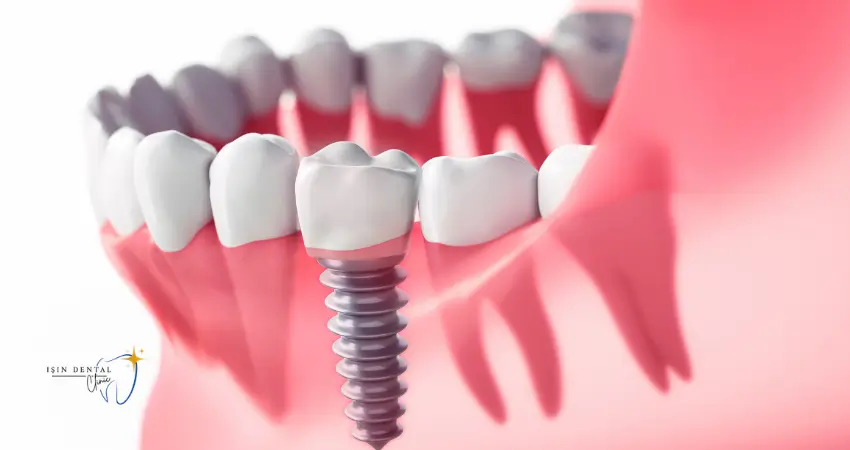
- Implants from a reputable manufacturer (Straumann, Nobel Biocare, Neodent, or Megagen)
- Strict sterilisation protocols
- Proper follow-up care and aftercare guidance
None of those requirements are unique to the UK. They are available in Turkey. The question is whether the clinic you choose actually provides them.
Accreditation is the most reliable starting point. In Turkey, the Ministry of Health licenses all dental clinics, but international accreditations go further. JCI (Joint Commission International) is the most rigorous, it applies the same standards used to evaluate hospitals in the US and Europe, covering everything from sterilisation protocols to patient safety procedures. ISO 9001 and ISO 13485 certifications indicate robust quality management systems. The Health Türkiye designation means the clinic has been approved under the Turkish Ministry of Health's medical tourism quality framework and its processes are subject to ongoing audit.
Beyond accreditation, the implant brands used are a reliable indicator of quality. Straumann, Nobel Biocare, Neodent, and Megagen are the same systems used in leading clinics across Europe. They come with documented success rates and long-term clinical data. Generic or unbranded implants -offered at significantly lower prices- do not. If a clinic is unwilling to disclose which brand they use, that absence of transparency is itself informative.
It also matters who is actually placing the implant. Implant surgery should be carried out by a specialist oral and maxillofacial surgeon or a dentist with dedicated implantology training and a demonstrable case history. Requesting to see before and after photographs, and asking how many procedures the surgeon has performed, are entirely reasonable steps. A reputable clinic will answer these questions without hesitation.
Most problems with dental tourism in Turkey -or anywhere else- stem from patients not conducting sufficient due diligence before committing. The following questions are worth raising with any prospective clinic:
- Which implant brand do you use, and can you provide the documentation?
- What warranty do you offer on the implant and on the crown, and is that warranty honoured if I return to the UK?
- Do you take a 3D CBCT scan as standard, or just a flat X-ray?
- What is the process if a complication arises after I have returned home?
- What is not included in the package price?
- Will my crown be screw-retained or cement-retained, and why have you chosen that for my case?
Vague, incomplete, or inconsistent responses should be treated as a reason to look elsewhere. That last question is a particularly good test of a clinic, and our guide to screw-retained vs cement-retained implants explains what a competent answer sounds like, including what clinics mean when they advertise a screwless implant. If you have not yet settled on implants at all, our comparison of dental implants vs dentures covers that decision first.
Turkey treats over 700,000 medical tourists annually, with dental care making up a significant portion of that number. The overwhelming majority of those patients have uneventful procedures and return home satisfied. Complication rates at accredited clinics in Turkey are comparable to those reported in European studies: implant survival rates of 90 to 95 percent over ten years the same benchmark used to evaluate procedures anywhere in the world.
Cases that go wrong tend to share common factors: treatment was selected primarily on the basis of price, the clinic had no verifiable accreditation, pre-treatment assessment was rushed or omitted entirely, and aftercare guidance was inadequate. These are not failures attributable to Turkey as a destination. They are the consequences of insufficient due diligence.
For most patients, implant treatment in Turkey involves two visits. The first typically five to seven days, covers consultation, 3D imaging, surgery, and the fitting of a temporary prosthesis. The second visit, three to six months later once the implant has fused with the bone, is for the permanent crown or bridge.
Patients requiring full arch restoration may be better suited to All-on-6 , which distributes chewing forces across six implants for greater long-term stability. Those with significant bone loss in the upper jaw may be candidates for zygomatic dental implants , which anchor into the cheekbone rather than the jawbone and eliminate the need for bone grafting entirely.
In the days immediately following surgery, mild swelling, bruising, and discomfort are to be expected. Most patients are comfortable enough to fly home within two to three days, though some choose to remain for a few additional days. The long-term recovery process maintaining bone health, keeping the surrounding tissue clean, attending annual check-ups, is the same regardless of where the implant was placed.
Having dental implants in Turkey is safe. Having dental implants at the wrong clinic in Turkey is not. That distinction may appear straightforward, but it requires genuine research: not simply comparing prices on an aggregator site, but examining accreditations, asking specific questions, and selecting a clinic that regards transparency as a baseline standard rather than a selling point.
The financial savings are real. The quality of care, at the right clinic, is real. The risks associated with cutting corners, however, are equally real. Conducting thorough research before booking remains the single most important step a patient can take.
Is it safe to have dental implants in Turkey?
Yes, at the right clinic. Turkey treats over 700,000 medical tourists annually and accredited clinics report implant survival rates of 90–95% over ten years, comparable to European benchmarks. The key is choosing a clinic with verifiable accreditation, reputable implant brands, and a qualified oral surgeon.
How much are dental implants in Turkey?
A single dental implant in Turkey typically costs between €350 and €700, compared to €2,500–€4,000 in the UK. The price difference reflects lower operating costs in Turkey, not a difference in materials or clinical standards.
How much are full mouth dental implants in Turkey?
Full mouth dental implants using All-on-4 in Turkey cost between €4,500 and €8,000 per arch, compared to €12,000–€20,000 per arch in the UK. All-on-6 options are also available for patients requiring greater stability.
How much do dental implants cost in Turkey compared to the UK?
Dental implants in Turkey cost roughly 70–80% less than in the UK. A procedure that costs €3,000 in London can be completed to the same clinical standard in Antalya for €500–€700, including pre-treatment 3D imaging and the implant crown.
What implant brands are used in Turkish dental clinics?
Reputable Turkish clinics use the same internationally recognised brands as European clinics, including Straumann, Nobel Biocare, Neodent, and Megagen. These come with documented success rates and long-term clinical data. Always ask your clinic to confirm the brand in writing before booking.