
A gum boil that does not hurt is almost always a sinus tract: a small drainage channel that an infection has opened from the root of a tooth out through the bone and gum. The reason it is painless is the reason it is worrying. Dental pain comes from pressure, and once the infection has carved itself an exit, the pressure disappears. Nothing has healed. The infection has simply found somewhere to go, and it will keep going until the source inside the tooth is treated.
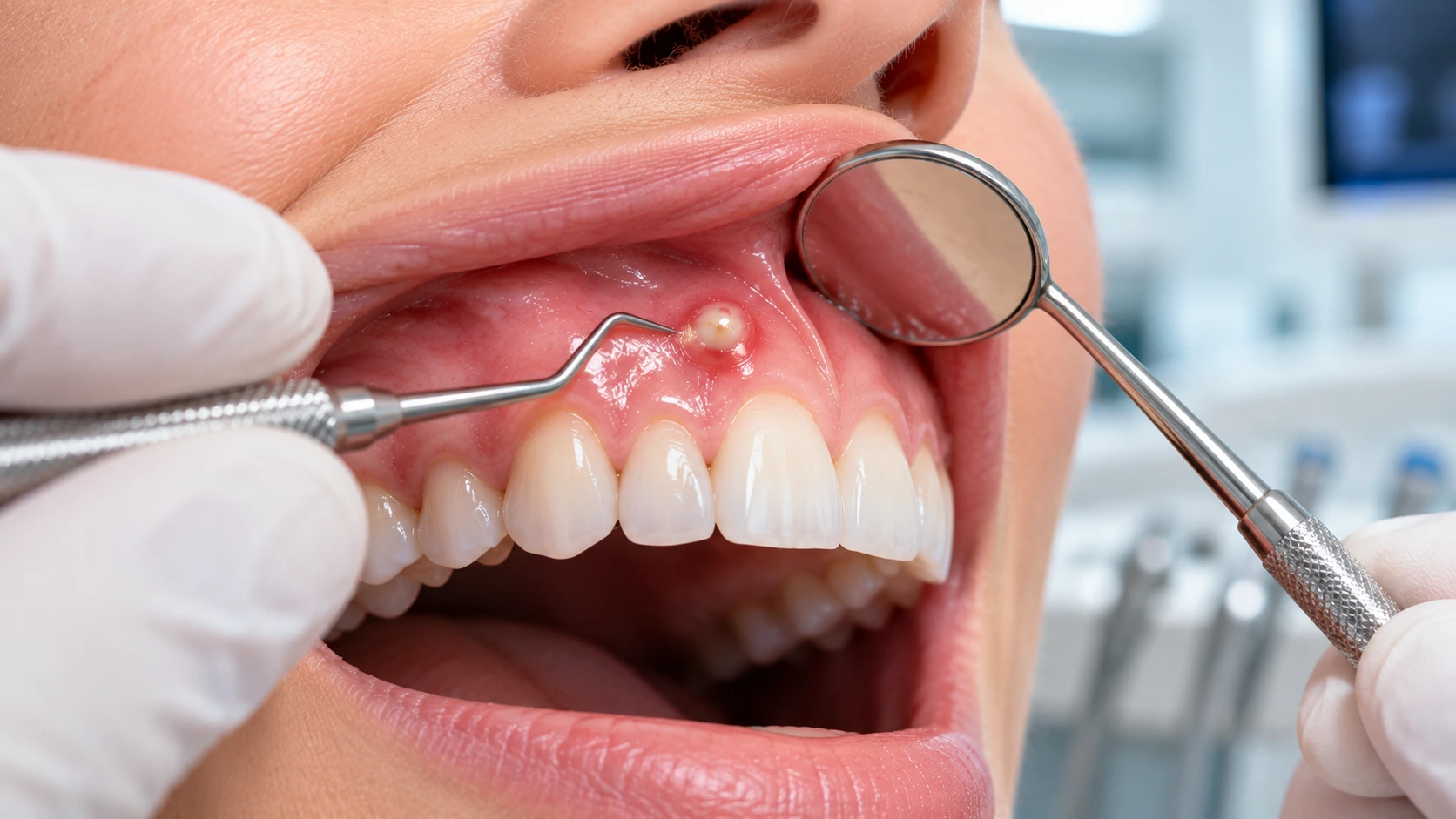
People put these off for months, and I understand why. It does not hurt, it sometimes shrinks for a week or two, and it is easy to decide it is nothing. Then it reappears in the same spot. That pattern of coming and going is the clearest sign that something is draining, and it is worth knowing what is actually happening underneath.
This is the single most misunderstood thing about these.
A toothache happens when infection builds inside a sealed space. The nerve chamber and the bone around the root tip have no room to expand, so pressure rises and the tooth becomes exquisitely sensitive, often worse at night. Many people have had exactly that, taken antibiotics, and felt it settle.
What frequently happens next is that the infection stops trying to push outward and instead works its way through the thin outer bone until it reaches the gum. The moment it breaks through, the pressure vents. The pain goes. And a small bump appears.
So the absence of pain here is not reassurance, it is drainage. The infection is more established than it was when it hurt, not less.
Five causes account for almost everything I see, and they need different treatment.
| Cause | What is happening | Treatment |
|---|---|---|
| Dead nerve in a tooth | Infection at the root tip, the most common cause by far | Root canal treatment |
| Deep gum pocket | Periodontal infection beside the root | Deep cleaning of the pocket |
| Failing root canal | A missed canal or a seal that has leaked | Retreatment or root tip surgery |
| Cracked root | Bacteria tracking down a split in the tooth | Usually extraction and replacement |
| Trapped debris | Food or a fragment lodged under the gum | Removal and irrigation |
A dead nerve is the answer in most cases. The tooth involved has often had deep decay, a large filling, or a knock years ago that quietly killed the nerve without ever becoming painful. Sometimes the tooth looks perfectly normal, which is why an x-ray matters more than appearances here. A dark tooth after an old injury is a related signal, and we cover discolouration in our article on black spots on teeth.
People search for this, so let me answer it directly. Squeezing a gum boil is a bad idea for three reasons.
- It pushes bacteria inward. Pressure applied from outside can drive infected material back into the surrounding tissue rather than out of it
- It achieves nothing lasting. The source is inside the tooth, several millimetres below. Emptying the bump does not touch it, and it refills within days
- It can make things worse. Breaking the surface with an unclean finger or a pin introduces new organisms into tissue that is already compromised
If one bursts by itself, which happens, rinse gently with warm salt water, keep the area clean, and arrange an appointment. That is all that is needed in the moment.
This happens on its own more often than people expect, usually while eating or brushing. You get a sudden salty or metallic taste, the bump flattens, and within a day or two it feels like the problem has solved itself.
It has not. A popped gum boil means the drainage channel emptied, nothing more. The infection at the root is untouched and the bump will reform, often in the same spot within a week or two.
What to do in the moment is simple:
- Rinse gently with warm salt water, roughly half a teaspoon in a glass, several times a day
- Keep brushing the area normally, gently, rather than avoiding it
- Do not squeeze it further to try to empty it completely
- Book an appointment within days, and say on the phone that an abscess has discharged
Mention it even if the bump has gone by the time you are seen. The fact that it drained tells us where to look, and an x-ray of that tooth will usually show the dark area at the root tip that explains everything.
A painless, draining boil is not an emergency. It needs an appointment in days rather than months. But the picture changes if drainage stops and the infection starts spreading, so get seen the same day if any of these appear.
- Swelling of the face, cheek or under the jaw
- Fever, chills or feeling generally unwell
- Difficulty swallowing, breathing or opening your mouth
- Swelling spreading towards the eye
- Rapidly worsening pain after a period of none
Those are signs the infection is no longer venting safely. They are uncommon, but they are the reason nobody should sit on a dental infection indefinitely.
The boil is not treated. The source is, and the boil then disappears by itself, usually within a couple of weeks.
Where a dead nerve is responsible, root canal treatment is the answer. The infected tissue is removed from inside the tooth, the canals are cleaned and shaped, and the space is sealed so bacteria have nothing to live on. The drainage channel closes once there is nothing feeding it. The tooth usually needs a crown afterwards, because a root-treated tooth is more brittle than a living one, and we compare the materials in our guide to veneers versus crowns.
Where a deep gum pocket is the source, the pocket itself is cleaned thoroughly and the gum given time to reattach.
Where the tooth is cracked through the root, there is usually nothing to save. It is removed, the site is allowed to heal, and the gap is closed with a dental implant or a bridge.
A word about antibiotics. They can calm swelling and are sometimes necessary before treatment, but no antibiotic reaches inside a dead tooth, because there is no blood supply left to carry it there. A course that makes the boil vanish for a fortnight has not cured anything. If you have been round that loop more than once, the tooth needs treating rather than another prescription.
This comes up constantly with patients who contact us about veneers or a smile makeover and mention a bump on the gum almost in passing.
Cosmetic treatment cannot go ahead over an active infection. Crowns or veneers placed on or beside an infected root will fail, the infection carries on underneath, and you will have paid for work that has to be redone. Any clinic willing to proceed anyway is protecting its timetable rather than your result.
The right sequence is simple: infection treated first, tissue given time to settle, cosmetic plan started afterwards. For patients travelling to Antalya that may mean a longer stay or splitting treatment across two visits, and we would rather tell you that before you book a flight than halfway through the week. The same principle applies to gum disease generally, which has to be stable before anything cosmetic is built on top of it.
If you are weighing up treatment abroad, our honest look at why people get their veneers done in Antalya covers what a properly planned case looks like, and is it safe to have dental implants in Turkey covers the questions worth asking first.
What is a gum boil?
A small raised bump on the gum, usually white, yellow or red, that is the visible end of a drainage channel from an infection deeper inside. Dentists call it a sinus tract or parulis. The infection is almost always at the tip of a tooth root or in a gum pocket, and the boil is simply where the pus has found a way out through the bone and gum.
Why does my gum boil not hurt?
Because it is draining. Dental pain comes from pressure building up with nowhere to go, so the moment the infection opens a channel to the surface, the pressure drops and the pain stops. The infection has not resolved, it has just found an exit. A painless boil is a sign of an established, ongoing infection rather than a settled one.
Should I pop a gum boil?
No. Squeezing it pushes bacteria back into the tissue and can spread the infection into the surrounding area, and it does nothing about the source at the root. It will refill within days because the channel stays open. If it bursts on its own, rinse gently with warm salt water and book an appointment, but do not go looking for it with a pin or your fingernail.
Will a gum boil go away on its own?
It may shrink or disappear for a while, which is what makes people put off treatment. It comes back, because the infection at the root is still there. Antibiotics can also quieten it temporarily without curing anything, since no drug reaches inside a dead tooth. The boil only goes permanently when the source is treated.
What causes a gum boil?
Most often a dead or dying nerve inside a tooth, following deep decay, a large filling or an old knock. Less often it comes from a deep gum pocket in periodontal disease, a cracked root, a failing root canal, or food trapped under the gum. A baby tooth with an abscess can also produce one in children.
How is a gum boil treated?
Treatment follows the cause. If the nerve is dead, root canal treatment cleans the infection out of the tooth and the boil heals within weeks. If a deep gum pocket is responsible, the pocket is cleaned and the gum treated. If the tooth is cracked beyond saving, it is removed and replaced, often with an implant. Antibiotics may help the swelling but never fix the source.
Is a painless gum boil an emergency?
Not usually, but it is not something to leave for months either. Book within days rather than weeks. Treat it as urgent if you develop facial swelling, a fever, difficulty swallowing or opening your mouth, or swelling that spreads towards the eye or under the jaw. Those signs mean the infection is no longer draining safely and need same-day care.
Can I have veneers or crowns if I have a gum boil?
Not until it is resolved. Cosmetic work placed over an active infection fails, and any dentist who agrees to do it without treating the boil first is cutting a corner that will cost you the restoration. The infection is treated, the tissue is given time to heal, and only then is the cosmetic plan started. This adds a step but protects the result.
Can a gum boil come back after root canal treatment?
Occasionally, if a canal was missed, the seal has failed or the tooth has cracked. A returning boil on a root-treated tooth is a signal to investigate rather than to repeat antibiotics. Retreatment, a small surgical procedure at the root tip, or removal and replacement are the usual options depending on what the scan shows.
I am travelling to Turkey for cosmetic work and have a gum boil, what happens?
Send photographs before you book so we can plan properly. In most cases the infection is treated in the first days of the trip and the cosmetic work follows once the tissue is healthy, which may mean extending your stay or splitting treatment across two visits. What we will not do is place veneers or crowns over an untreated infection to keep a timetable.
Last of all, do not let the lack of pain decide this for you. A boil that comes and goes in the same spot is a tooth telling you something clearly, and caught at this stage it is usually a straightforward root canal rather than a lost tooth. Send a photograph through our free online consultation and we will tell you what it looks like and how quickly you need to act.