Turkey Teeth: What They Are and What to Know Before You Go
An honest guide from a specialist dental clinic in Antalya. No hype, no horror stories, just what UK patients actually need to know.

If you've spent any time on TikTok or scrolling through holiday photos, you've probably seen the phrase "turkey teeth", usually attached to a dazzling white smile, and just as often to a horror story. So let's clear things up.
"Turkey teeth" isn't an actual treatment. It's the nickname British patients have given to having veneers or crowns fitted at a clinic in Turkey, usually as part of a full smile makeover. The name stuck because thousands of people from the UK now travel here every year, and because a handful of bad clinics gave the trend a reputation it doesn't have to deserve.
At Işın Dental Clinic in Antalya, we treat a lot of UK patients, and we'd rather tell you the honest version than the salesy one. This guide covers what the treatment actually involves, what it costs in pounds, the risks worth knowing about, and how to make sure you end up with the good kind of turkey teeth, not the kind that ends up on the news.
What Are Turkey Teeth?
What Are Turkey Teeth Made Of?
There is no single material called "turkey teeth". What you actually get is one of four things, and the one you are quoted for matters more than the price:
- Zirconium: a white ceramic core with porcelain layered over it. Strong enough for back teeth and the usual choice for a full set of zirconium crowns.
- E-max (lithium disilicate): a glass ceramic that transmits light more like enamel, so it looks more natural at the front. Used for E-max veneers and crowns.
- Porcelain laminate: very thin shells for front teeth only, bonded with minimal preparation. See laminate veneers.
- Composite resin: not a lab-made shell at all, but resin sculpted onto the tooth in one session. The cheapest option and fully reversible. See composite bonding.
If a clinic will not tell you which of these you are getting, that in itself tells you something. Ask for the material and the brand in writing before you pay a deposit.
Turkey Teeth: Veneers or Crowns?
When people say turkey teeth, they almost always mean one of two things:
- Veneers: thin shells (porcelain or composite) bonded to the front of your existing teeth. Very little of your natural tooth is touched.
- Crowns: caps that cover the whole tooth. More of the tooth is reshaped first, which is where a lot of the online worry comes from.
The right choice depends on your teeth, not on a trend. A good dentist will tell you which one suits you, and sometimes the honest answer is that you only need a few veneers, or even just whitening, rather than a full set of zirconium crowns.
Are Turkey Teeth Filed Down? The "Shark Teeth" Question
This is the part everyone worries about, and fairly so. You may have seen photos of teeth filed down to small pegs. That happens when a clinic prepares teeth aggressively for crowns, and when it's done badly or unnecessarily, it can't be undone.
Here's the honest version: veneers need only a small amount of enamel removed, sometimes none at all. Crowns need more reshaping, which is sometimes genuinely necessary, for example on damaged or root-treated teeth, and sometimes not. The problem isn't Turkey. It's any clinic that reaches for crowns when veneers would do, because it's faster. We always show you the plan and explain why each tooth is treated the way it is. If you want to understand the difference before you travel, our guide on veneers vs crowns explains when each one is genuinely needed.
Why So Many UK Patients Get Turkish Teeth
Turkish teeth, as the trend is also spelled, took off in Britain for reasons that have very little to do with vanity. Cosmetic dentistry is not NHS work: veneers and crowns are private, and private dentistry in the UK is expensive. Waiting lists for routine NHS treatment pushed a lot of people into the private market for the first time, and once they were paying out of pocket anyway, the gap between a UK quote and an Antalya quote became hard to ignore.
Three things keep it going. The saving is large enough to cover a flight and a hotel and still leave you thousands better off. Treatment that would be spread over months of UK appointments is compressed into one trip, because the clinic has its own laboratory on site. And Antalya is a holiday destination with direct flights from most UK airports, so the trip is not a chore.
None of that makes it automatically the right decision for you. It does explain why tens of thousands of British patients now travel abroad for dental work each year, and why the ones who regret it are nearly always the ones who chose on price alone.
How Much Are Turkey Teeth?
This is usually the reason people start looking abroad in the first place. A full set of veneers or crowns in the UK can run into five figures. With us it's a fraction of that, even with your hotel and transfers included. For a full breakdown, see our guide to how much turkey teeth cost, and if you're wondering about durability, how long turkey teeth last.
| Treatment | UK (typical) | At Işın Dental Clinic |
|---|---|---|
| Hollywood Smile, full set (20 zirconium crowns) | £8,000+ | £3,500 |
| Composite bonding (16 teeth) | £4,000+ | £1,950 |
| All-on-4 dental implants (full arch) | £12,000+ | £6,600 |
UK figures are typical market ranges for comparison. Our prices include VIP transfers, hotel accommodation and a night guard. See the full price list.
What's Included in a Turkey Teeth Package?
A proper package should cover more than the dentistry. Ours typically includes an online consultation and treatment plan before you book, VIP airport transfers, hotel accommodation, all appointments and scans, the treatment itself, and a night guard to protect your new smile. Most patients are in Antalya for around five to seven days, depending on the work involved.
The Turkey Teeth Process, Step by Step
- Photographs and x-rays, from home. You send photos of your smile and any recent x-rays. We tell you what is realistic, which teeth genuinely need treating, and what it costs, before you book anything.
- Day one in Antalya: examination and planning. A full clinical examination and 3D scan. This is where the plan can change, because a photograph cannot show gum disease or a failing root. If fewer teeth need treating than you expected, we say so.
- Day two: preparation and temporaries. Teeth are prepared as conservatively as the case allows, impressions are taken, and you leave with temporary teeth. Nobody walks around Antalya with prepared teeth on show.
- Days three to five: the try-in. Your permanent teeth come back from the laboratory and are tried in before they are cemented. This is your chance to change the shade or the shape, and it is the step that rushed clinics skip.
- Final fitting and night guard. The restorations are bonded, the bite is adjusted, and a night guard is made to protect them from grinding.
- Back in the UK. You fly home with your treatment records and shade details, so any dentist can work with what you have.
Most veneer and crown cases take five to seven days in Antalya, and our day-by-day guide to how long it takes to get veneers in Turkey sets out what happens on each of them. Implants are the exception: they need a healing period, so they run over two trips. See dental implants in Turkey for how that timeline works.
Turkey Teeth Before and After
The best way to judge a clinic isn't the price, it's the results. Here are real cases from our own patients.
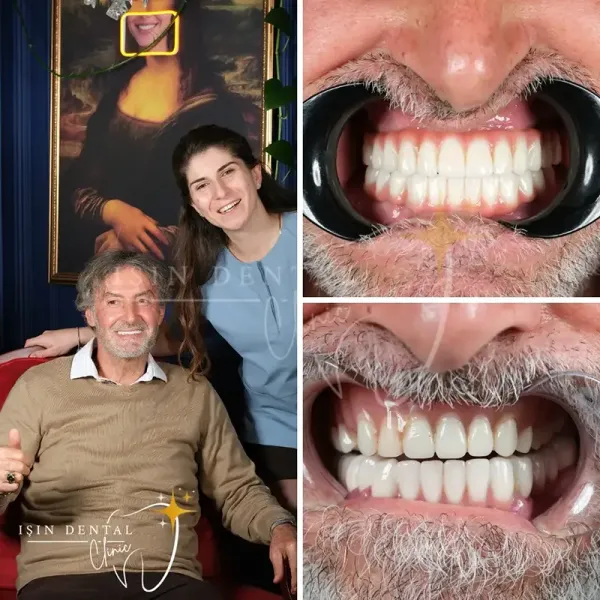
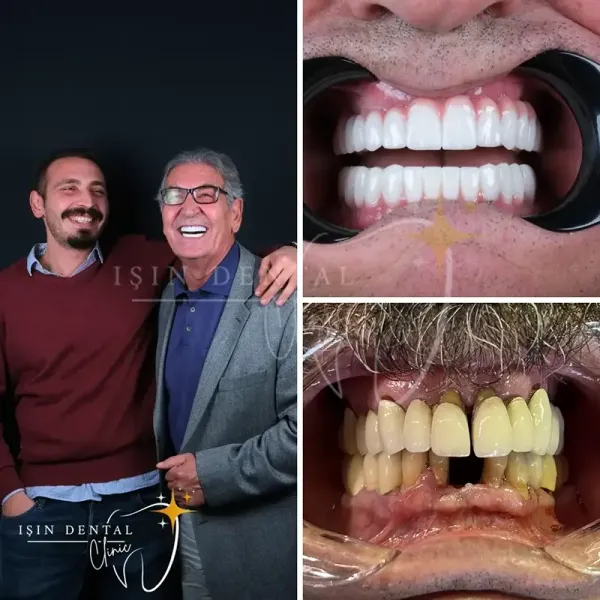
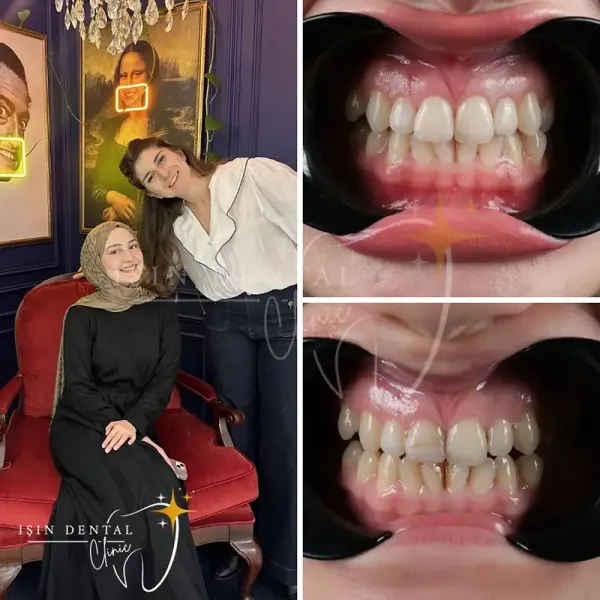
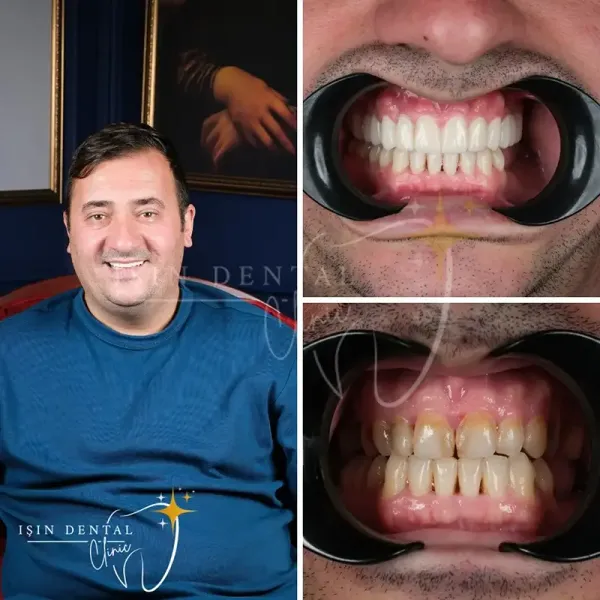
See the full before & after gallery
Turkey Teeth Gone Wrong: How to Avoid Bad Results
Done well, by qualified dentists using quality materials, the treatment is safe and routine. The stories that go wrong almost always trace back to the same things: rushed timelines, crowns fitted where veneers would do, and clinics chosen on price alone. The honest advice is to slow down, ask to see real cases, and make sure someone qualified examines your teeth before committing to anything, including with us.
We have written this up properly, with the actual millimetres of enamel each treatment removes and the checklist worth running on any clinic: are Turkey teeth safe? It also covers what happens if you have gum disease, which is the single most common reason a good set of crowns fails early.
Natural-Looking Turkey Teeth: Our Approach
- Specialist dentists, not a high-volume smile factory
- Honest planning: if you don't need a full set, we'll say so
- An English-speaking team used to looking after UK patients
- A clear, fixed quote before you travel, with no surprises when you arrive
Which Turkey Teeth Treatment Do You Actually Need?
"Turkey teeth" is a nickname, not a treatment, so the useful question is which of these you are a candidate for. Every one of them is on our price list, and the examination on day one is what decides between them.
- Discolouration only, teeth otherwise sound: teeth whitening first. It costs a fraction of the alternatives and removes nothing from the tooth.
- Chips, small gaps or uneven edges: composite bonding, done in one session and fully reversible.
- Front teeth you want reshaped and lightened: laminate veneers or E-max veneers, which keep most of your enamel.
- Heavily filled, root-treated or broken teeth: zirconium crowns or porcelain crowns, where full coverage is genuinely protecting what is left.
- A full smile makeover, top and bottom: a Hollywood smile, usually 20 crowns or veneers.
- Missing teeth: dental implants for individual gaps, or All-on-4 and All-on-6 for a full arch. Where bone loss rules those out, a zygomatic implant is the fallback.
Most of the disappointing results we see come from a patient being sold the treatment two rows further down this list than they needed.
Turkey Teeth Aftercare Back in the UK
What happens after you fly home decides how long the work lasts, and it is the part nobody talks about online.
- Wear the night guard. Grinding is the most common cause of a chipped crown or veneer, and most people who grind do not know they do it. The guard is not optional.
- Keep your check-ups. Crowns and veneers do not decay, but the tooth underneath and the gum around it still can. Six-monthly checks and a hygienist visit protect the margin where the restoration meets the tooth, which is where problems start.
- Clean the margins properly. Interdental brushes matter more than the toothbrush here. Plaque sitting at the gum line is what turns a good result into receding gums three years later.
- Keep your paperwork. Take home the material, shade and brand of every restoration. A UK dentist can repair or replace a crown far more easily when they know what it is.
- Tell us early if something feels wrong. A high bite or a loose crown is a small fix if we hear about it in the first weeks. Our team stays reachable after you fly home, and in most cases we can tell from photographs whether a local dentist can handle it.
Will a UK dentist treat work done abroad? Almost all will. Some are blunt about not guaranteeing someone else's dentistry, which is fair enough, but refusing routine care is rare.